The Same Breath
At the opening night of Mil Vezes Revista, a reflection on the invisible bond between those on stage and those watching, and on the place of human experience in the future of Theatre
Theatre, Presence and TechnologyAndré Marques Moreira8 min read
Published 10 October 2026
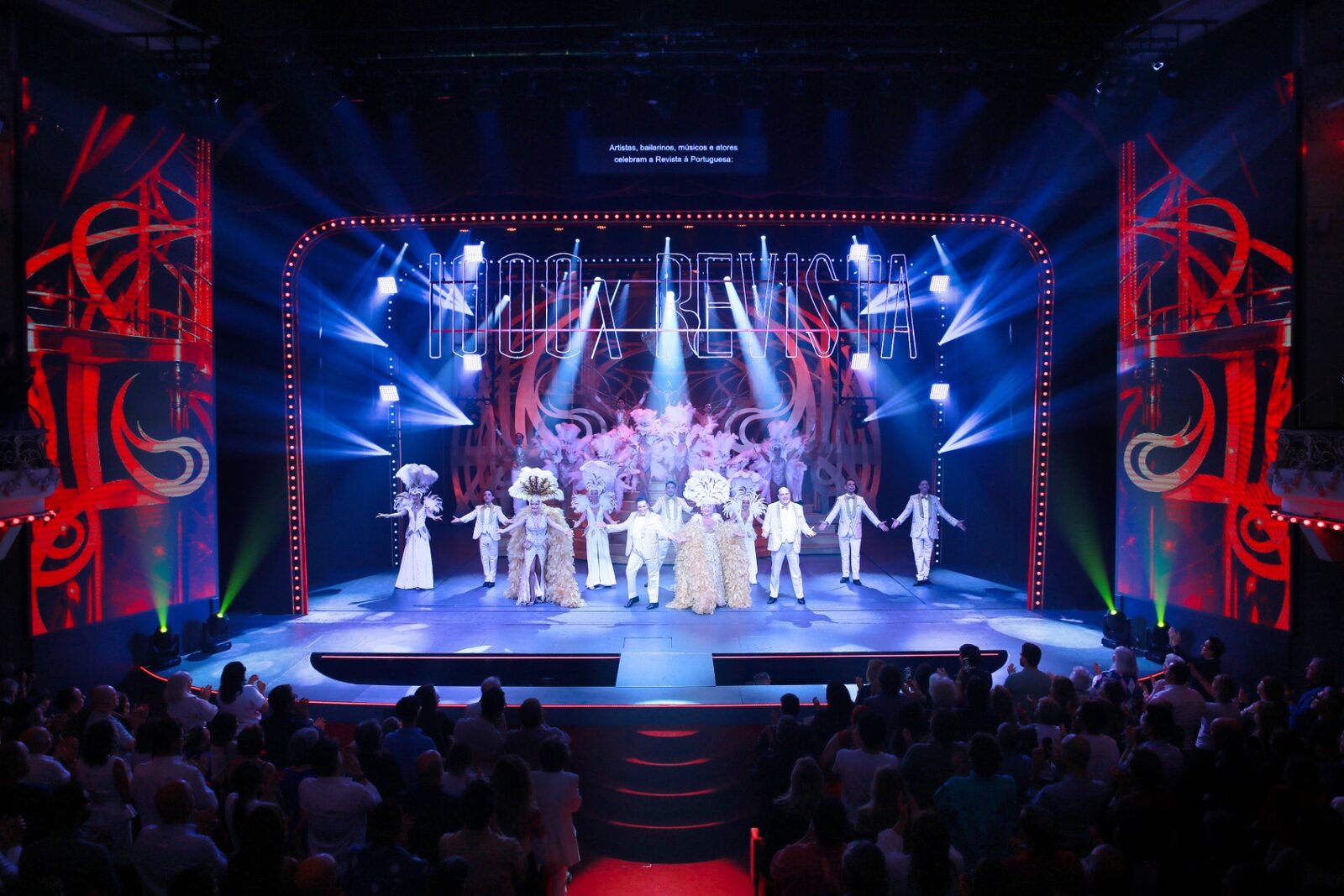
There is something extraordinary about watching a performer who truly knows the stage. Not merely the physical space, its dimensions, its entrances and exits, the position of the lights or the exact moment a song should begin, but that kind of invisible territory between those who perform and those who watch, where everything seems under control and yet everything continues to happen for the first time.
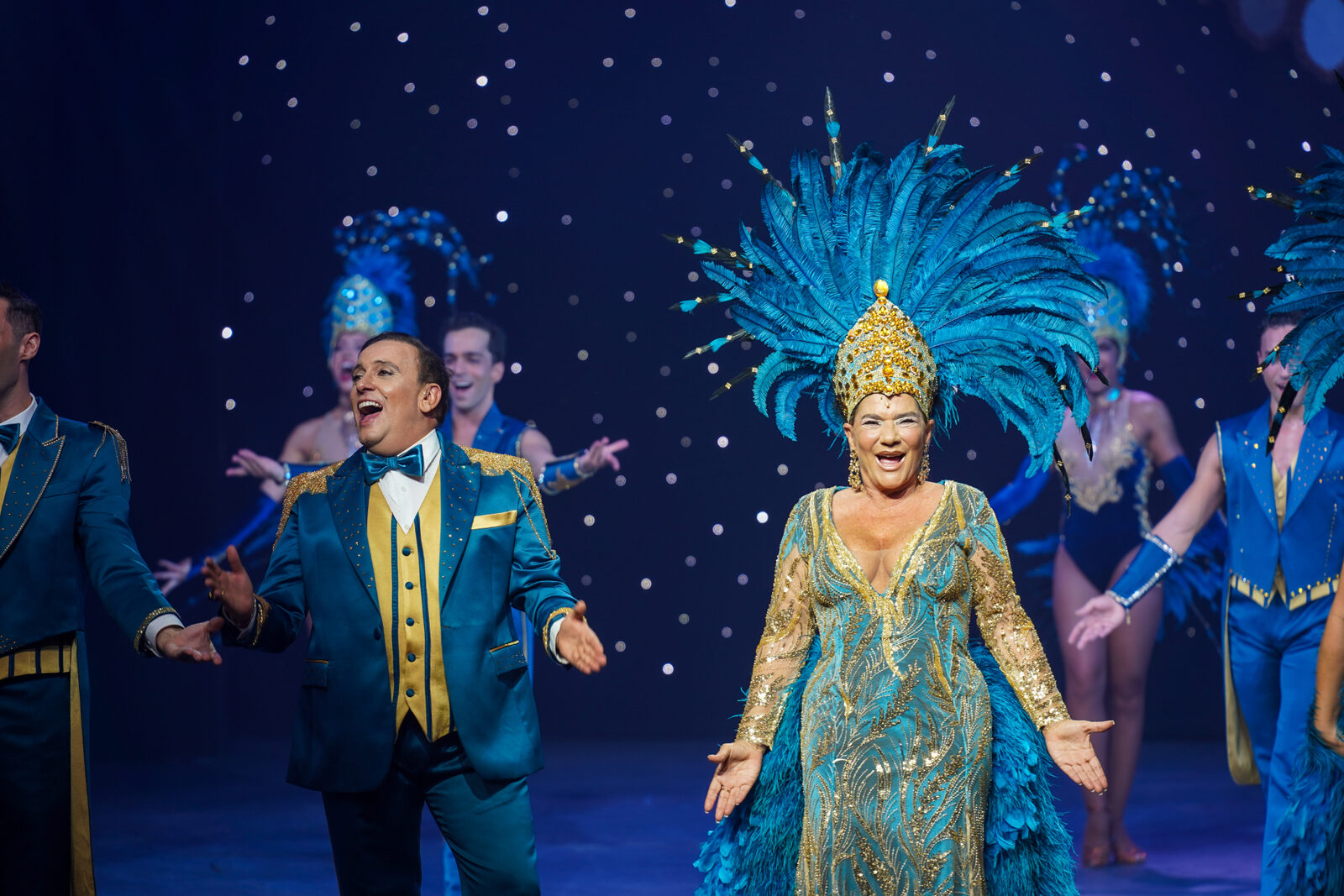
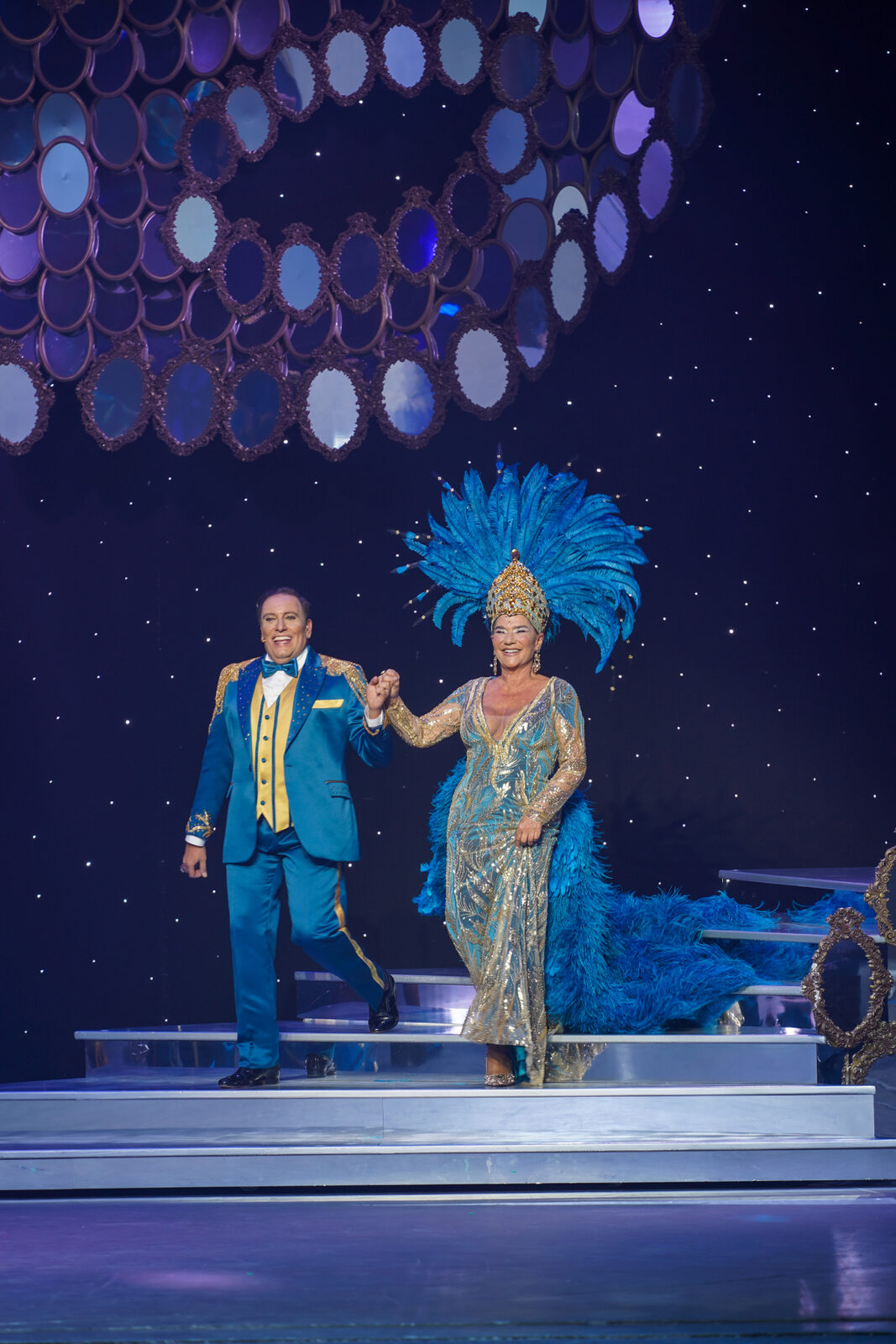
On the opening night of Mil Vezes Revista, by Filipe La Féria, at Teatro Politeama, I found myself thinking about this as I watched Marina Mota and Joaquim Monchique, two distinct artists who share a particularly fascinating quality: the ability to listen to an audience with the same attention with which they perform for it.

There are moments when a shared breath seems to exist, a kind of silent understanding that subtly alters the rhythm of a scene, lengthens a pause, turns a laugh into an unexpected opportunity or allows a glance to say what no word could say with the same precision. The audience responds to the performer, but the performer also responds to the audience, and in that correspondence, which happens without anyone having arranged it, an intimacy is born that is hard to explain to anyone who has never experienced it. It is an exchange that naturally depends on talent and charisma, but also on experience accumulated over thousands of performances, during which one learns to recognise the almost imperceptible movements of a house and to understand that, at times, what matters most is not what one does, but the instant one decides to do it.
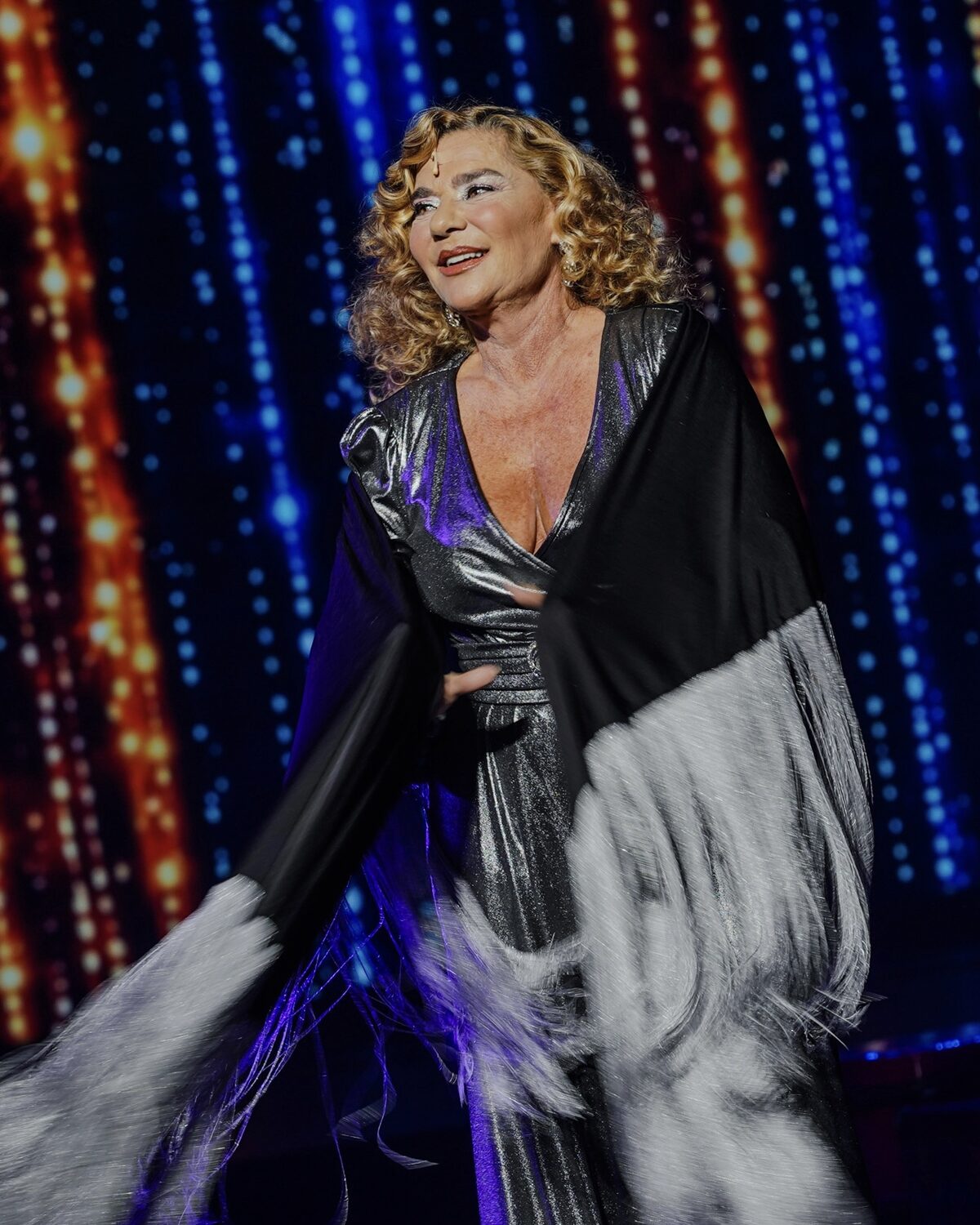
Marina Mota is celebrating fifty years on stage, and there is something deeply revealing in the ease with which that experience shows itself. It is not simply a matter of knowing a script, mastering a piece of choreography or following a director's instructions. It is a matter of possessing a freedom that is only won after many years of discipline, when technique has been so thoroughly absorbed that it no longer occupies conscious thought and allows the performer to devote all their attention to what is really happening. In Joaquim Monchique I recognise the same readiness to inhabit the moment, to sense the mood of an audience and to build with it a complicity that is not exhausted by what was rehearsed.
Perhaps this is one of the most extraordinary dimensions of Theatre and, paradoxically, one of the least discussed when we think about its future. We are used to talking about what a production presents to the audience, the quality of its performers, the set design, the music, the staging or the resources it uses, as if the show were a wholly finished work waiting to be looked at. But a theatrical performance never exists in quite the same way before it meets an audience, because the audience is not only the recipient of an artistic creation; it is also a presence that transforms it.
The audience is not only the recipient of an artistic creation; it is also a presence that transforms it.
The same scene may have been rehearsed for weeks, repeated dozens of times and built with almost mathematical rigour, yet it only takes a laugh lasting a few seconds longer than usual, a house remaining unexpectedly silent or an emotion spreading differently among the spectators for the timing of the performance to change. That transformation does not necessarily mean the show drifts away from what was conceived, but that it finds, within its own structure, room for a human relationship that no rehearsal can fully anticipate.
It is precisely here that the reflection becomes especially interesting to me, at a time when technology occupies an ever more decisive place in artistic creation and when we are beginning to discuss, with surprising ease, the possibility of replacing performers with artificial intelligence systems, digital figures or even robots.
I have no resistance whatsoever to the use of these technologies; quite the opposite. I am deeply interested in the way they can expand our imagination, transform the possibilities of a staging and enable experiences that would previously have been impossible. Theatre has always known how to appropriate the inventions of its time, from the stage machinery that dazzled audiences in earlier centuries to the contemporary possibilities of projection, automation and digital environments. It would be strange for an Art built on the human capacity to imagine other worlds to refuse the tools that allow it to keep inventing them.
What troubles me is something else, something subtler, which begins to emerge when the discussion stops focusing on what technology can add to an artistic experience and starts organising itself around what it might make dispensable. It is a seemingly small shift, but one that contains an essential difference in how we understand the very act of creating, because it assumes that a performance can be reduced to a set of sufficiently well-executed actions and that, once those actions are reproduced, we will have preserved what truly matters.
Yet when we watch a great performer in relationship with their audience, we realise that a decisive part of their Art lies precisely in what escapes that description. Not because it is necessarily impossible to develop systems capable of recognising reactions, adjusting movements or responding in real time to certain stimuli, but because the artistic question is more complex than the ability to produce a technically convincing response. What is at stake is the nature of the relationship that is formed, the meaning we attach to the presence of another person and the awareness, shared by those on stage and those in the stalls, that this encounter belongs to a time that cannot be interrupted, corrected or repeated in the same circumstances.
What is at stake is the nature of the relationship that is formed, the meaning we attach to the presence of another person and the awareness that this encounter belongs to a time that cannot be repeated in the same circumstances.
There is a vulnerability in that condition which seems to me inseparable from the theatrical experience. The performer offers themselves to the gaze of others and accepts that their performance exists in a permanent relationship with events they do not entirely control, while the spectator, even sitting in the dark, takes part in that experience through attention, silence, laughter and emotion. Neither knows exactly how that night will be remembered, and perhaps part of the fascination lies in that mutual trust, in the willingness to share an event whose value does not depend on being entirely predictable.
That is also why it seems insufficient to me to assess the future of Theatre solely through the evolution of its technical resources. We can build ever more impressive sets, use images of extraordinary sophistication, automate movement and create environments that challenge our perception of space, but we will still have to answer the same question that has accompanied this Art for centuries: what makes a group of people want to gather in a room to watch, together, an experience they could live in so many other ways?
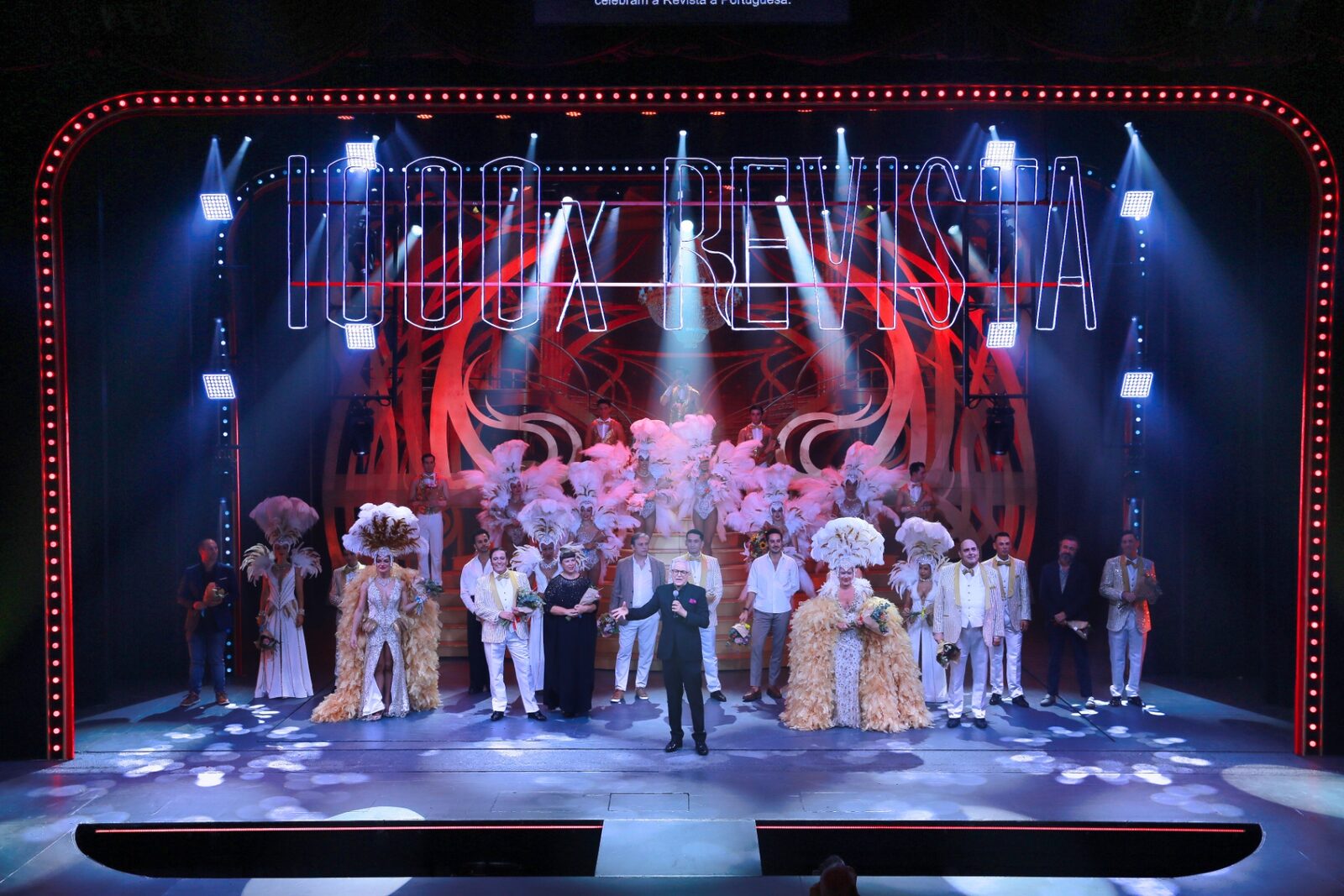
Perhaps the answer lies less in what we can show than in what we can make people feel, and above all in the awareness that this experience is being lived by other people at the same time as us. In a society in which a growing share of our relationships is mediated by screens, algorithms and systems designed to anticipate our behaviour, there is something singular about a space where attention is still shared so immediately and where what happens on one side can transform, however discreetly, what happens on the other.
I do not mean by this to defend a nostalgic idea of Theatre, as if its authenticity depended on keeping the tools of the past intact or on shielding itself from the changes that inevitably accompany each generation. I am interested in precisely the opposite: imagining a future in which technology allows us to explore new languages without losing sight of what gives meaning to the experience we are building. Perhaps the real challenge is not to determine how far we can push the capabilities of machines, but to understand better what we wish to do with them and what place we want to reserve for human experience within those possibilities.
And so I return to the image of Marina Mota and Joaquim Monchique before an audience, to the almost imperceptible way an entire house seems to follow the breathing of those on stage, and I think of the sheer amount of knowledge, sensitivity and experience concentrated in a seemingly spontaneous gesture. What we see may last only a few seconds, but it carries decades of learning and an artistic intelligence that cannot be judged solely by the precision of the result, because it also shows itself in the capacity to recognise the other and to let oneself be transformed by that presence.
If I am asked whether the future of Theatre involves robots on stage, I am not sure the answer will necessarily be no. It may well become possible to create extraordinary experiences with them, and it would be a contradiction to rule out new forms of expression from the outset in an Art whose history has always depended on imagination and experimentation.
But after watching that opening night, I was left thinking that perhaps we are asking the wrong question. In our eagerness to discover everything technology might one day do, we risk paying less and less attention to what is already happening before our eyes and which, precisely because it seems so natural to us, we rarely stop to understand.
Theatre is made of people, certainly, but its true singularity perhaps lies in an even more beautiful idea: Theatre happens between people, in that invisible space where someone breathes, someone listens and, for a few moments, an entire room seems to breathe as one.
“Mil Vezes Revista” by Filipe La Féria at Teatro Politeama.
Share this note
How would you rate this note?
…
Get the next notes
I write about culture, audiences and strategy. No fixed schedule, no noise.