Time, Audiences and the Ambition to Last
What Interstellar can teach us about art, scale and cultural relevance
Culture and AudiencesAndré Marques Moreira14 min read
Published 6 August 2026

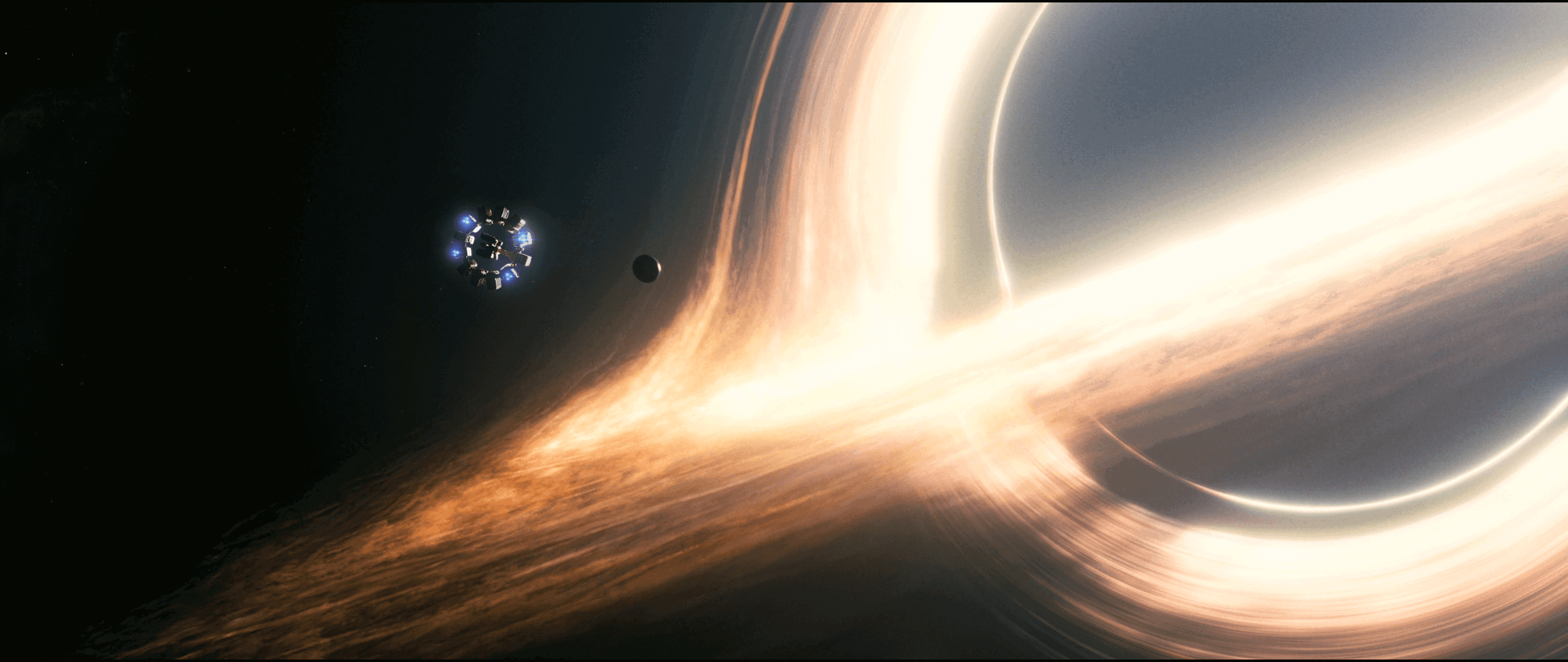
I saw Interstellar for the first time many years after the film had already entered popular culture, at a point when its music was familiar to me, its images circulated freely detached from the narrative, and the film itself had acquired the peculiar status of works that seem to belong to our memory even before we have seen them. It may be too early, historically speaking, to call it a classic, but it is certainly a landmark, not only for its technical and cinematic scale, but because it managed to do something contemporary culture often treats as a contradiction: to be popular without being intellectually indifferent, to be grand without being empty, to be commercial without renouncing the ambition to unsettle the viewer.
The film ended, but the thinking did not end with it.
Some works give us a story; others, beyond the story, temporarily alter the scale from which we observe our own lives. Interstellar belongs to that second category. It speaks of space, yet forces us to think about intimacy; it speaks of the survival of humanity, yet returns continually to the fragility of a bond between a father and a daughter; it speaks of galaxies, dimensions and black holes, yet what truly disorients us is the possibility of losing the time of those we love.
Space, in the film, is not merely a physical place. It is a way of making visible what exceeds human understanding. It stands for the existence of a reality so vast that it disorganises our usual measures, diminishes our individual importance and, paradoxically, makes every human gesture more precious still. Against the scale of the universe, a life seems insignificant; against the concrete experience of that life, however, every lost minute can take on an almost absolute dimension.
This is where the film finds its poetic force. The relativity of time appears not simply as a scientific concept, but as an emotional tragedy. Time ceases to be the invisible backdrop against which life happens and becomes a concrete, uneven, cruel material, capable of separating people who still love one another but no longer belong to the same duration. What is an hour for some may be a whole life for others. And perhaps that is one of the film's most painful intuitions: we do not all live in the same time, even when our clocks appear to say otherwise.
Each person inhabits a temporality of their own, made of waiting, memory, anticipation, loss and desire. There are minutes that pass without leaving a trace and seconds that rearrange an entire existence. There are relationships that remain emotionally present for decades and others that disappear before they formally end. The physics of the film amplifies an experience we already know intimately: time is not only a quantity, it is a perception, a wound and a form of consciousness.
Cinema has a singular relationship with that material. From its origins, it has been a technology for preserving time. It records bodies that are no longer present, it keeps voices, movements and faces, separating the instant of creation from the moment of reception. An actor performs on a given day, yet that performance can return years later, before someone who did not yet exist when the image was captured. The past comes back without ceasing to be past.
Perhaps that is one of the deepest differences between Cinema and Theatre.
Theatre exists in the coincidence of presence and disappearance. It happens in front of us and, precisely because it is happening, it immediately begins to cease to exist. Every performance carries the awareness of the unrepeatable. Even when the text, the actors, the set and the staging are the same, no night is absolutely identical to the one before, because bodies change, the audience changes, the rhythm shifts, and the outside world itself enters the auditorium with a different emotional temperature.
Cinema, by contrast, turns performance into permanence. What we see has already happened, yet it happens again through us. The actor is not present, although their presence has been preserved. The emotion is not born from physically sharing the same instant, but from the technical and artistic capacity to bring that instant back before new viewers.
This is not about deciding which form is superior, because that comparison impoverishes both. Theatre and Cinema are not successive stages of a single evolution, as though one had replaced or refined the other. They are different answers to the same human need: to represent experience, to organise chaos, to create meaning and to observe life from outside it.
The medium is not a simple packaging for art, a neutral structure inside which the content remains intact. The medium modifies what can be thought, shown and felt. On stage, the actor works with presence, distance, continuity and the shared energy of the room. In Cinema, they work with the extreme proximity of the camera, the fragmentation of the shoot, the edit, and the possibility that an almost imperceptible gesture may acquire monumental dimensions.
A movement of the eyes can, in Cinema, contain an entire dramatic turn. In Theatre, that same turn must cross the space, inscribe itself in the body and reach the back row. These are not different degrees of the same skill, but distinct grammars of human presence.
What interested me most in Interstellar, however, was not only the encounter between science, emotion and Cinema, but the way a work of enormous commercial scale can carry philosophical questions without abandoning spectacle. There is a persistent tendency to set entertainment against thought, as if a popular work necessarily had to simplify the world, and as if depth were reserved for more austere languages, less accessible and less interested in the audience.
That opposition is not merely false. It is culturally damaging.
A work does not become superficial because it wishes to be seen by many people. Nor does it become profound simply because few people understand it. Complexity does not depend on obscurity, just as accessibility does not require intellectual poverty. The real artistic challenge lies in creating different levels of reading, allowing the same work to be received through emotion, narrative, image, music, thought or personal identification.
Interstellar can be seen as a space adventure, a family story, a reflection on time, a metaphysical speculation, a narrative about survival or a meditation on the insufficiency of human knowledge. These readings do not cancel each other out. They accumulate.
It is that capacity for accumulation that characterises many of the great popular works. They do not diminish the viewer in order to reach them. They create an entrance clear enough for different audiences to come close, while leaving interior space for each person to find a distinct experience. A child may enter through the adventure, an adult through loss, a scientist through the ideas, another viewer through the music or the visual scale. Everyone watches the same film, yet they do not attend exactly the same work.
This relationship between reach and density should be of deep interest to cultural institutions and, in particular, to Theatre. Not because Theatre should imitate Cinema, compete with its technical means or aspire to the same form of reproduction, but because it needs to understand better how an experience becomes culturally relevant beyond the moment in which it is presented.
Theatre often lives inside its own bubble, protected by routines, references, hierarchies and audiences built over decades. That continuity can be a strength, but it can also produce a dangerous illusion. An inherited audience is not necessarily a guaranteed audience. It is a historical relationship that needs to be renewed.
When an institution keeps communicating with the same people, through the same codes, with the same arguments and the same language, it may preserve an appearance of stability for some time. The houses still fill, the audience still returns, the habits still work. Yet beneath that continuity, the institution may be slowly consuming the affective capital accumulated in the past without building a new relationship with the future.
An ageing audience is not a problem in itself. The problem arises when an organisation ages culturally alongside it, and stops creating new entrances, new curiosities, new rituals of belonging and new ways of explaining why Theatre is still necessary.
Building audiences does not mean replacing older spectators with younger ones, as though Culture were a generational contest. Nor does it mean chasing trends, infantilising communication or turning every production into an anxious attempt to appear contemporary. It means understanding that the audience is not a natural entity that exists beforehand and merely needs to be informed that a show exists.
Audiences are built.
They are built through education, repetition, trust, accessibility, memory, belonging and experience. They form when someone walks into a Theatre for the first time and does not feel that the space belongs to other people. They grow when a work finds a language capable of connecting a distant story to a present unease. They consolidate when communication does more than announce dates, casts and prices, and instead helps to create context, desire and meaning.
A cultural campaign should not work merely as the promotional layer applied at the end of an artistic process. It can be the first act of public interpretation of the work. It can find the human question running through the show, build its place in the present and prepare the viewer to recognise something of themselves in what they will encounter on stage.
In that sense, communicating Culture is not only about selling tickets. It is about building legibility.
It is about making a work intelligible without reducing it, accessible without trivialising it, desirable without hollowing it out. It is about understanding that, before choosing a show, audiences often need to imagine the experience that show might give them. The purchase does not begin with the price or the poster. It begins with the possibility that someone feels the work concerns them.
This is also where the debate about Portuguese Cinema becomes particularly revealing. It is often repeated that audiences do not like Portuguese Cinema, that Portuguese films do not sell, that there are no actors with international standing, or that the country lacks the scale to build a genuine industry. Some of these difficulties are objective, but the continual repetition of the diagnosis can turn into a form of resignation.
Portugal has artistic, technical and performing talent. What it does not always have is industrial continuity, sustained investment, effective distribution, promotional capacity, a strategic relationship with audiences, and structures that allow talent to develop beyond isolated projects.
A film can be produced without an industry truly existing. An industry demands circulation, memory, specialisation, accumulated learning, teams that move between projects, companies able to grow, external markets, financing mechanisms and a regular relationship with the public. Above all, it demands that commercial ambition stop being seen as an automatic threat to artistic integrity.
In Portugal, a certain suspicion persists towards the wish to reach many people, as if seeking an audience were a lesser concession, a surrender to the market or a contamination of cultural purity. Yet a work loses no dignity because it wishes to circulate. The responsibility of creating need not be separated from the responsibility of reaching people.
The opposition between auteur Cinema and popular Cinema, between Culture and commerce, between depth and spectacle, frequently serves to hide the absence of structures capable of combining those dimensions. On one side we produce commercially predictable, intellectually fragile work; on the other, artistically ambitious work that treats communication and the audience as concerns external to the creative process. What is often missing is the meeting ground.
That meeting ground exists in other cultural contexts, and it partly explains my attraction to internationalisation. It is not only about seeking larger markets, better working conditions or more developed structures. It is about observing other systems in order to realise that what, inside a bubble, appears natural and inevitable is only one specific way of organising the world.
Internationalisation offers critical distance. It allows you to return to your own country with different questions, to compare models, identify blockages and imagine other possibilities. But internationalising does not mean erasing Portuguese identity, superficially copying London, Paris or Hollywood, or adopting a foreign language as an automatic sign of modernity.
The works that genuinely cross borders are not, in most cases, those that erase their origin. They are those that find, within their particularity, a universal question.
Interstellar speaks of the universe, yet it begins in a house, a family, a field and an interrupted relationship. Its cosmic scale only works because it is anchored in a recognisably human experience. In the same way, Portuguese Culture does not need to stop being Portuguese in order to become international. It needs to turn its specificity into a language others can understand, and to build the means for that language to travel.
Perhaps Portuguese fatalism, so often associated with fado, saudade, envy or the idea of a collective destiny, also works as a comfortable narrative. By repeating that “this is how we are”, we turn historical, institutional and economic problems into permanent features of the national character. And what is presented as essence stops seeming transformable.
Envy, for instance, may not be merely an individual moral failing, but the symptom of small, closed systems with little mobility, in which someone's success appears to shrink the space available to everyone else. Where there are few resources, few institutions and few opportunities, one person's growth can be experienced as a threat. In broader ecosystems, by contrast, success can create companies, teams, jobs, investment and new markets.
There is no need to romanticise other countries, since they too have inequalities, exclusions, precarity and concentrations of power. What matters is to see that cultural systems can be designed differently, and that ambition need not be confused with arrogance, just as commerce need not be the enemy of Culture.
The main lesson I take from Interstellar for my own work arises precisely from this encounter between thought, emotion, spectacle and scale. I am interested in understanding how a work enters the collective imagination, how a campaign can function as the first act of an experience, how audiences are formed, how desire is built, and how operations, business, communication and creation can work together without any one of those dimensions impoverishing the others.
I do not want to choose between cultural relevance and commercial result, because that choice is frequently a false one. A cultural work needs an audience to fulfil its social function, just as a campaign needs thought if it is not to be reduced to promotional noise.
The challenge is to create experiences accessible enough to summon many people, yet dense enough to remain with them after they leave the auditorium. Experiences that do not simply occupy time, but alter, if only for a moment, the way that time is perceived.
Perhaps that is the true meaning of a work lasting.
It does not only mean remaining available, being repeated, archived or quoted. It means continuing to produce thought in different people, in other places and at other moments. It means surviving not only as an object, but as a question.
Cinema has the technical capacity to preserve images in time. Theatre has the ritual capacity to make every moment unrepeatable. Yet both share a deeper ambition: to allow human beings to observe themselves from a distance great enough to recognise what, within everyday life, remains invisible.
That is what I found in Interstellar. Not simply a film about space, but a work about our difficulty in grasping the scale of the world, about the fragility of relationships, about the violence of time, and about the human persistence in seeking meaning even when the universe seems under no obligation to offer it.
And perhaps that is also what I look for in Culture and in my work: not only to produce communication, sell a show or fill a room, but to help build experiences capable of joining scale and intimacy, business and thought, desire and memory.
Because a work may begin on a stage, on a screen or in a campaign, but it only becomes truly relevant when it goes on living inside someone.
Was this note useful?
Get the next notes
I write about culture, audiences and strategy. No fixed schedule, no noise.