Rosaline: Building a World Before Asking the Audience to Enter It
On Renato Arroyo’s dream, contemporaneity on stage and what Theatre can learn when it decides to speak to a generation that no longer necessarily discovers it through a poster
Theatre, Creation and AudiencesAndré Marques Moreira15 min read
Published 6 September 2026
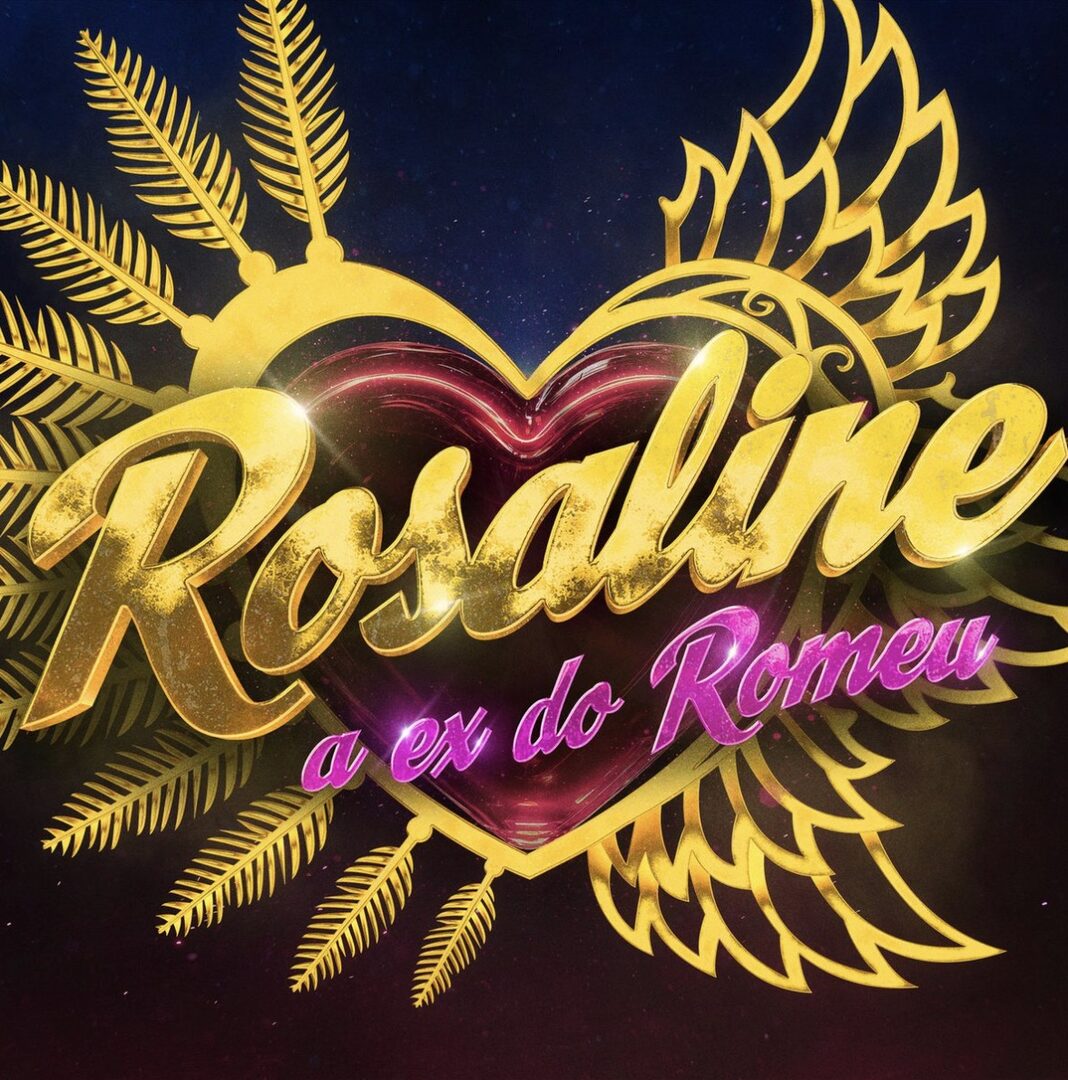
A few years ago I was sitting in Renato Arroyo’s home while he read me a text that still belonged almost entirely to the realm of imagination. There was an idea, a handful of pages and that very particular excitement which surrounds a project when nobody yet knows quite what it will become. There was no auditorium, no set, no costumes, no audience, no box office and no production structure behind it. What there was, above all, was the conviction of someone who could see with remarkable clarity something that did not yet exist.
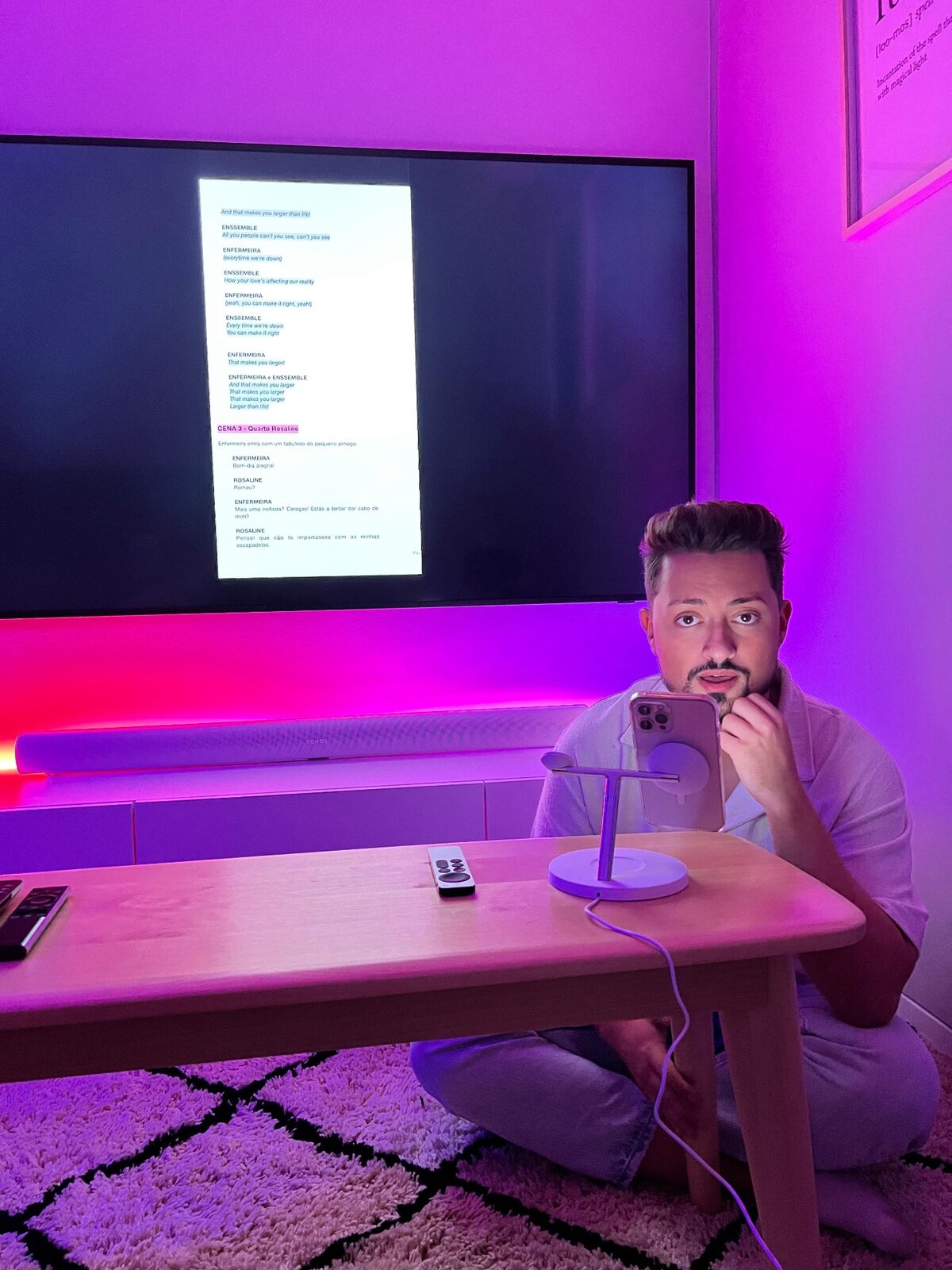
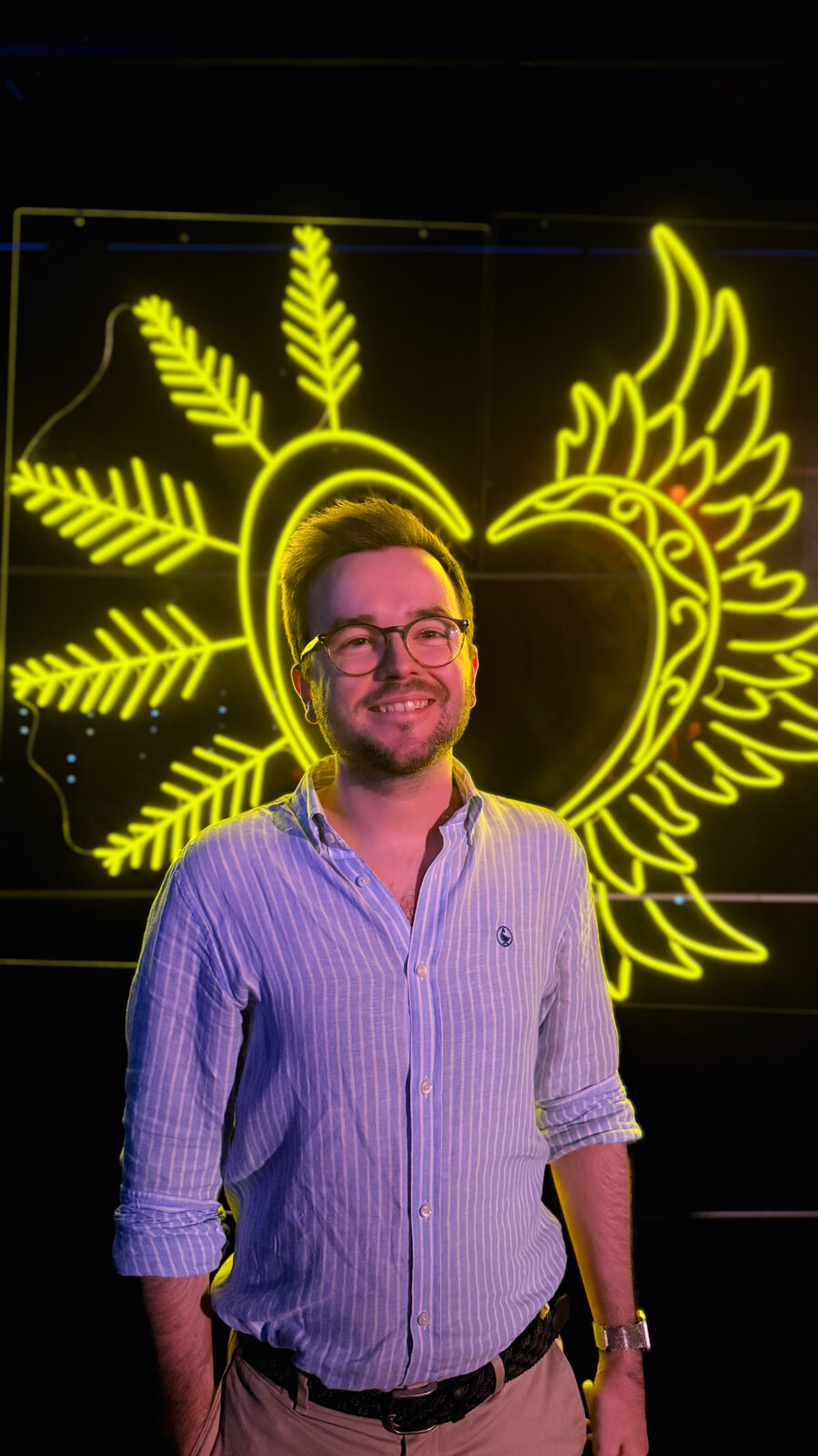
The photograph I took of him that day ended up, years later, in the programme of *Rosaline, a Ex do Romeu*. I like that coincidence, because it documents a dimension of creation which normally disappears the moment a show reaches the stage. Audiences receive the result, yet they rarely know the distance travelled between a first intuition and what finally materialises in front of hundreds of people.
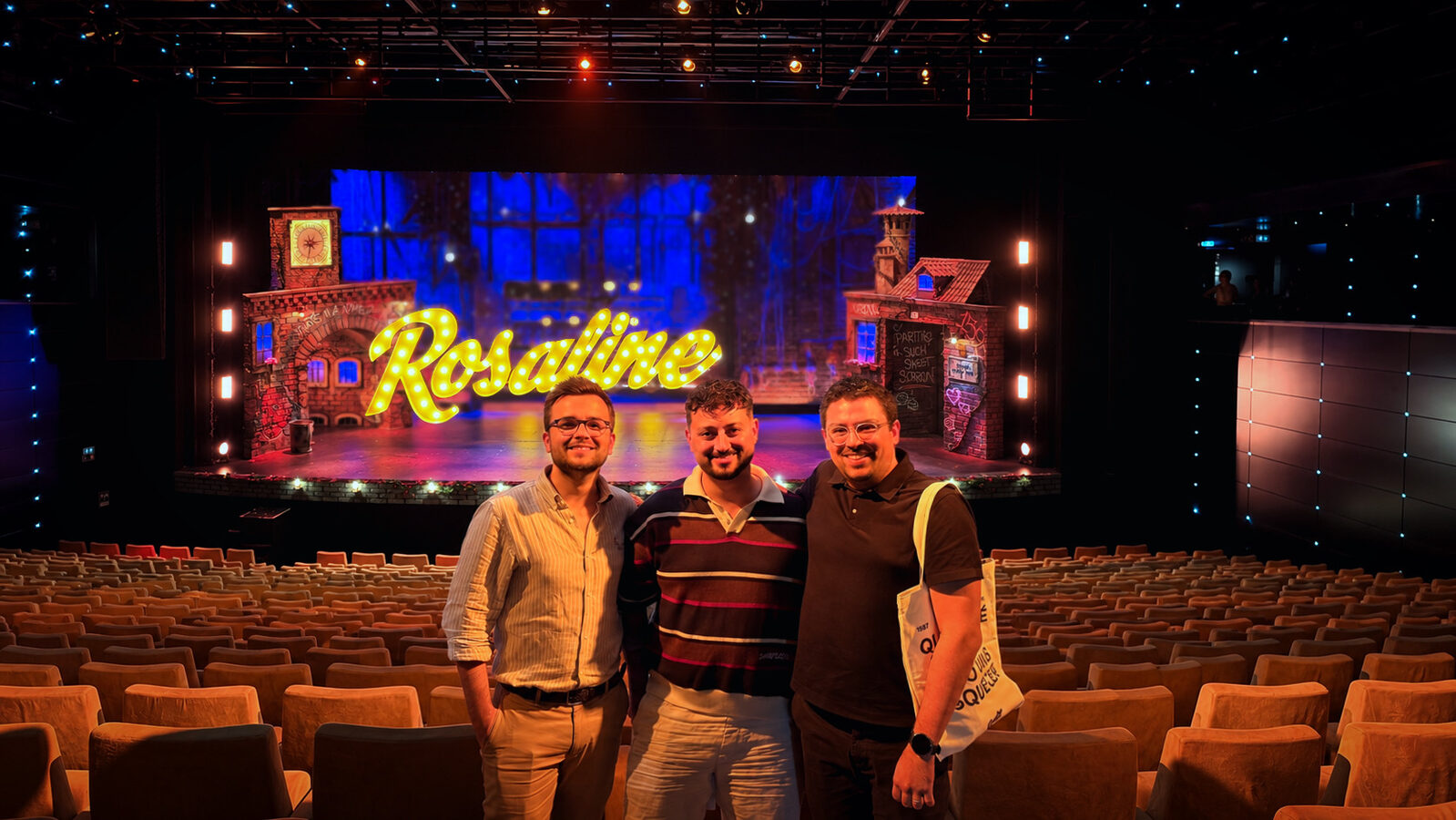
At the charity preview of Rosaline, in aid of Casa do Artista, that distance became particularly evident. The Auditório dos Oceanos was sold out and, faced with an audience that laughed, reacted, recognised references, applauded and gradually allowed itself to be won over by the universe in front of it, I thought more than once of that first reading. UAU made the professional realisation of a dream matured over years possible, and assembled the conditions for an idea that had lived so long inside its creator’s head to acquire scale, body, light, movement and an audience.
Yet perhaps the most interesting thing is not simply that Renato managed to bring Rosaline into being. It is what the process and the result reveal about the way he creates. Some people begin by imagining a scene, others a character or a story. Renato seems, above all, to think in worlds.
Creating is not merely having an idea
A dream may start a show, but between the initial image and the night the lights come up there is an enormous amount of work the audience will hardly ever see: writing and rewriting, searching for references, studying images, listening to music, observing spaces, researching periods, rejecting solutions, discovering others, imagining light, testing movement and, perhaps above all, sustaining for years an idea for which no guarantee of realisation yet exists.
Throughout that process I followed the development of Rosaline in different ways. I remember, for example, suggesting to Renato that he should go to Verona. Not merely to visit Juliet’s famous balcony as a tourist, but to look properly at the city, to observe the architecture, the stone, the colours, the proportions, the courtyards, the streets and the textures of a place which, through Shakespeare and centuries of cultural appropriation, became a universal setting for a certain idea of love.
The suggestion eventually turned into a journey and, looking back now, it fits a way of working that ran through the entire development of the project. Renato spent years collecting references, images, solutions and impressions. Some came from deliberate research, others emerged from travel, from shows he had seen, from music videos, songs, graphic languages, objects, choreography or fragments of popular culture that were stored away until they found the right moment to resurface.
There is an almost archaeological dimension to this kind of creation. The creator gradually builds an inner archive and does not always know, at the moment of filing a reference away, where it will eventually be used. Years later, a texture observed in a city, a particular combination of lights or a gesture lodged in memory may reappear, transformed into a scenic solution.
In the case of Rosaline, this process was not confined to what happens during the performance, because Renato never seemed to think of the show purely as a text to be staged. From very early on he conceived it as a universe that could continue to exist beyond the stage.
That is why ideas began to appear for pins, tote bags, T-shirts, hoodies, mugs, shakers, flasks, programmes, a vinyl record with the music of the show and a range of objects held together by the same aesthetic identity.
At first glance one could call all of this merchandising and leave it at that. I believe, however, that there is a far more interesting idea at work. An object associated with a show only acquires genuine cultural value when it stops looking like a logo printed onto a surface. When somebody wants to wear a garment, carry a flask, keep a record or pin a badge to a jacket, they are seeking to extend their relationship with that universe physically. In a sense, they are carrying with them a small fragment of the world they have chosen to belong to.
It is at that point that we move beyond the production of a show and begin the construction of a cultural property.
Being contemporary is more than using contemporary references
It would be easy to say that Rosaline seeks a particularly close relationship with a younger generation. There are memes, pop culture references, echoes of divas and music stars, ways of speaking, gestures and codes that part of the audience recognises immediately because they belong to their everyday cultural life.
What strikes me as more interesting, however, is that this contemporaneity was not simply added to the show through surface references. It runs through the very way the show communicates, moves and presents itself to the audience.
Even before the performance begins, for instance, two front-of-house members walk along the front of the stalls holding the usual no-recording symbols, transformed here into neon objects. A functional instruction, normally delivered through a recorded voice or a conventional message, is absorbed into the visual identity of Rosaline.
It may look like a minor detail, yet it is precisely these details that make a universe coherent. The show does not begin only when the first character appears, because the experience has already started at the moment the rules of the auditorium are presented in the language of that world.
Music, set design, lighting, costume, make-up and movement then enter into dialogue, and it is in that articulation that the show’s overall vision becomes especially clear. The choreography by Mimi Mourato and António Máximo is, for me, one of the fundamental pieces of that language, full of invention, humour, energy and a very clear awareness of a particular contemporary visual and bodily culture. Many of the gestures carry references that younger spectators identify almost intuitively, without needing any explanation of their origin, because they already belong to a shared vocabulary formed between music videos, social media, concerts, pop culture and the forms of performativity that circulate daily on our screens.
Pedro Morim’s costumes fulfil an equally important function, refusing rigid historical reconstruction and helping to free the characters from the obligation to remain trapped in the period they belong to. There is Verona, there is Shakespeare and there is a visual memory of a particular historical time, but all of it is reorganised through avowedly contemporary codes.
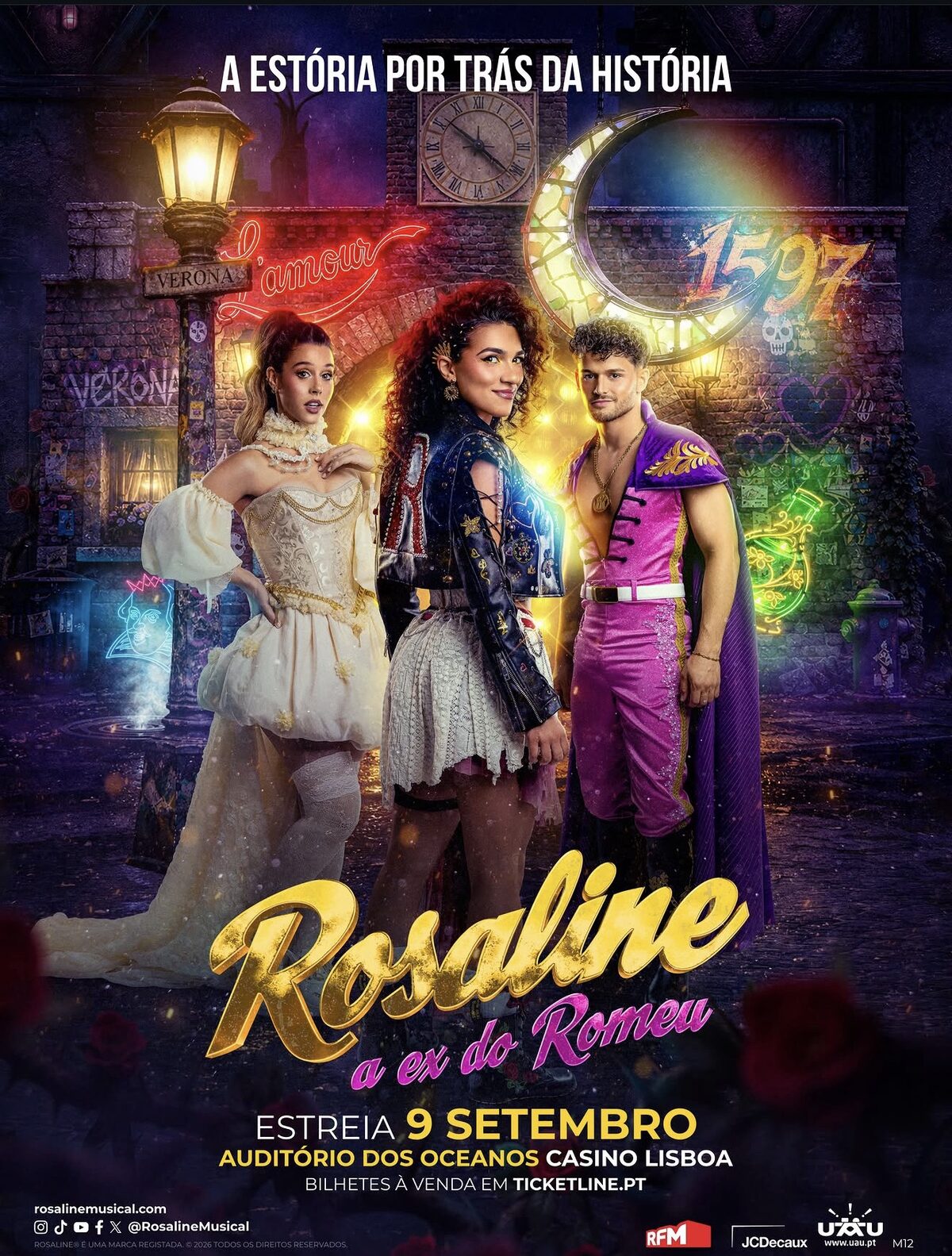
Alexandre Almeida’s lighting design, the set developed by Renato Arroyo and Lara Faustino, Daniel Nicolau Fernandes’s sound design, Daisy Marques’s make-up design and the music, with Miguel Amorim and Filipe de Albuquerque at the heart of the composition, complete that displacement. This is not an attempt to reconstruct Verona archaeologically, but to create the Verona of Rosaline: an emotional, stylised city that need only be recognisable enough for us to step into it and free enough for a new generation to claim it as their own.
That is also why the choreography takes on such an important role. It works almost as connective tissue between periods, references and creative departments, helping the show to position itself within a contemporary artistic language without losing contact with the universe that gave rise to it.
Naturally, any creation that seeks such a close dialogue with the present faces a risk: what is intensely contemporary can age quickly. Memes disappear, references stop circulating and codes are replaced by others. The survival of a work therefore depends on those references never being its only content.
In Rosaline, beneath the pop surface there is far older and more durable material: desire, rejection, identity, comparison, the need for recognition and the search for who we are once we stop existing only in relation to somebody else. Perhaps that is precisely why Shakespeare continues to allow so many reinventions. Forms change with extraordinary speed, yet certain human emotions seem far less willing to disappear.
The audience that is not looking for Theatre
There is another question in Rosaline that interests me almost as much as what happens on stage: how do you win over a generation for whom going to the Theatre is not necessarily the first choice of entertainment?
For far too long, part of cultural communication rested on a kind of implicit agreement whereby there existed a ‘Theatre audience’, and the work of communication consisted mainly in informing that audience that a new show was available. A poster was created, a synopsis published, information distributed to the press, a few advertisements launched, and then everyone waited for people to come.
That audience still exists and remains essential, but it is no longer sufficient. There is an entire generation that rejects neither culture nor storytelling, yet lives inside an entertainment ecosystem incomparably wider than the one that existed a few decades ago. Theatre competes with concerts, festivals, cinema, streaming, gaming, restaurants, travel, immersive experiences, influencers, digital creators and a practically infinite quantity of content available through the same device that remains permanently in our hand.
Asking those people to become a ‘Theatre audience’ first and only then discover Rosaline seems to me to invert the problem, because it is the show that needs to find those people in the places where they already are.
This shift profoundly changes what we understand by cultural communication. Social media can no longer be used merely as promotional space where a vertical adaptation of a poster is published; it becomes a set of tools for discovery, desire, identity and audience development.
Someone may discover Rosaline through a song, identify with a character, send a video to a friend, recognise a reference, admire a costume or laugh at a particular situation long before ever deciding to buy a ticket. When that happens, the stage is no longer necessarily the beginning of the relationship with the show; it can become its culmination.
There is an important consequence here for anyone working in cultural marketing: the sale no longer depends solely on the ability to persuade someone to buy a seat, but also on the ability to create a universe that person wants to be part of.
It is at this point that we begin to talk about community and, eventually, about tribes. A cultural tribe does not need thousands of members or a formal structure. It can be born simply between two people who share a song, recognise a line, wear a pin, choose a favourite character, argue about a scene or decide to go to the show together because they have already had several previous encounters with that universe.
This logic is particularly relevant when we talk about FOMO. The fear of missing out does not have to be manufactured artificially through countdowns, false urgency or repeated messages about ‘last tickets’. There is a far more powerful way to create it: making the show culturally desirable to the point where someone feels there is an experience, a language or a conversation they would like to be part of.
The difference is substantial. In one case we push a transaction; in the other we build belonging.
That is also why I do not consider the vinyl, the hoodie, the pin or any other object connected to Rosaline irrelevant to this analysis. Beyond their commercial dimension, they are markers of belonging and mechanisms through which a spectator can extend the experience after leaving the auditorium. It is the difference between selling a ticket for a given performance and beginning to build fandom.
When the industry has not yet updated its image of someone
Finally, there is a dimension of Rosaline that seems to me particularly interesting because it goes beyond the show and touches on a very common question in the creative industries.
For years, the most publicly visible work by Renato Arroyo was connected to image: photography, posters, campaigns and audiovisual content for a range of productions. It is perfectly natural that, for many people, this became the main category through which they learned to identify him.
The problem begins when we confuse what is most visible in a person with the totality of their capabilities. There is a very human tendency to classify someone according to the first skill for which they became known and then to struggle to update that definition. The designer continues to be seen as a designer, the photographer as a photographer, the marketing professional as a marketing professional, as though skills were sealed compartments and as though recognition in one field prevented ability in another.
In Renato’s case, Rosaline makes publicly visible a dimension that was not born with this production. His training in Film and his accumulated experience gave him contact with directing, working with actors, visual construction and audiovisual narrative. In directing the documentary Severa – A Criação de um Grande Musical, he followed a theatrical process closely, from auditions and early development through to rehearsals, the building of the show and opening night. Over the years he has remained close to countless Theatre productions, observing processes that audiences usually know only through the final result.
His path also includes film and audiovisual directing, among other projects, and it helps to explain that the public image built around posters and commercials was only the most immediately visible part of a far broader set of skills.
This does not mean, of course, that following creative processes automatically turns someone into a competent director, which would be far too simple an argument. It means rather that Rosaline does not come from someone who one day suddenly decided to try directing without any experience of actors, creative processes, visual language or theatrical production. It comes from a path along which different skills were accumulated until they found a project that allowed them to be gathered under a single vision.
It is here that the relationship between ability and recognition becomes particularly interesting. The moment at which a person is publicly given a certain title does not always coincide with the moment they developed the skills that title presupposes. Very often the first major opportunity does not create the ability; it merely makes it visible on a scale large enough for others finally to recognise it.
The cultural world, like any other professional world, also lives on narratives. Some creators are presented very early as authors, directors or filmmakers and, from that moment on, are interpreted through those categories. Others spend years building skills across different areas of creation and need a sufficiently visible work for collective perception to catch up with what had already been happening. There is no need to turn that difference into a conflict, because the stage has a far more effective way of answering the question: it allows the work to become observable.
Building a world
Walking into the Auditório dos Oceanos to see Rosaline means, in a sense, stepping into a world that for a long time existed only in Renato’s imagination and in the archive of references, ideas and solutions he accumulated over the years.
The show’s great achievement does not seem to me to lie simply in having reached the stage. It lies in having reached it with an identity strong enough for us to recognise.
There are professionally competent shows that end and, a few hours later, become difficult to describe without falling back on the story they told. When I think of Rosaline, I immediately think of an atmosphere, a particular relationship with colour and light, a specific body language, a pop irreverence, a deliberately free relationship with the classical universe and a constant desire to extend the experience beyond the physical limits of the auditorium.
It is in that coherence that I find Renato’s authorship. Authorship does not mean that one person did everything. Theatre is, by definition, a collective art, and any attempt to attribute the result of every creative department to a single name would diminish precisely what makes theatrical creation so interesting.
A strong artistic vision reveals itself differently: in knowing which world one intends to build and in creating the conditions for set designers, costume designers, choreographers, musicians, lighting designers, performers and technicians to contribute to it through their own talents.
Perhaps creating a world is exactly that: not personally designing every element within it, but understanding its rules, its temperature, its rhythm and its language clearly enough to guide many people in the same direction without erasing what each of them brings that is singular.
Having imagined that world, one then has to convince other people to enter it. First the collaborators, then the producers, the performers and the technicians and, finally, those for whom the whole process exists: the audience.
On the night of the charity preview of Rosaline, before a sold-out Auditório dos Oceanos and an audience reacting with an energy impossible to manufacture, that final passage finally became visible. What had been a private idea for years was now working as a collective experience.
Perhaps that is one of the things that fascinates me most about the act of creation. For months or years, someone can see something that does not yet exist for anyone else, and spends that time trying to reduce the distance between the image in their head and what the real world allows them to build. They research, experiment, fail, change direction, persist, convince people, discover new solutions and continue describing, in necessarily incomplete words, a place only they can still see in full.
When the moment arrives at which explanation is no longer needed, because the lights come up, the actors enter, the music begins and hundreds of people react to the same thing at the same time, that world finally stops belonging solely to the person who imagined it and begins to exist inside those who have entered it.
To find out more about Rosaline, a Ex do Romeu, visit the show’s official website. Tickets are available through Ticketline. You can also follow the show on Instagram, TikTok and Facebook.
Was this note useful?
Get the next notes
I write about culture, audiences and strategy. No fixed schedule, no noise.