Cultural Marketing for Theatre: Why Social Media Is Not Enough
Social media is essential for building presence, recognition and discovery, but cultural marketing begins before it and continues long after the final piece of content has been published.
Cultural MarketingAndré Marques Moreira11 min read
Published 6 August 2026

In cultural organisations, a question about marketing is often answered with a content calendar. Which pieces will be produced, how many times a week to publish, which formats are working, how to increase reach, which video might generate more interaction, or which trend should be adapted to the show.
All of these questions are legitimate, but they belong to a late stage of the process. Harder questions should come first: who needs to understand this proposition, what place might it occupy in their life, how wide is the distance between interest and decision, what barriers stand in the way of attendance, and what combination of promise, trust, opportunity and convenience might make the cultural experience genuinely choosable.
No one working in Culture today can do without social media. The problem is not the channel, but the quiet replacement of strategy by channel, which happens when an organisation stops thinking about the whole of its relationship with audiences and begins to organise its marketing around the daily demands of a platform.
When the channel takes the place of strategy
Platforms have accustomed teams to thinking through formats, frequencies and immediate metrics. The calendar must be fed, the algorithm answered, dimensions adapted, trends followed, video produced, comments encouraged and a presence kept regular enough for the organisation not to disappear from the audience's field of vision.
The urgency of this work is real, particularly in small structures where the same person may be shaping the campaign, producing content, managing advertising, answering messages, updating the website and watching sales. Yet that urgency can create the illusion that running the channel is the same as leading the strategy.
Strategy begins somewhere else. It does not first ask what we should publish, but what we need to make understandable; it does not start with the format most likely to gain reach, but with the reason that might bring someone closer to the experience; it does not only ask how to appear more often, but how that presence gradually turns into recognition, trust and decision.
When those questions go unanswered, social media stays active but the campaign loses direction. A great deal is produced, posts accumulate and metrics are monitored, without any clear idea of what each piece of content is actually building.
When Publishing More Becomes a Symptom
Another sign that the channel has taken the place of strategy is excessive publishing. Under pressure to remain visible, many organisations begin to confuse presence with frequency and frequency with effectiveness, as though simply increasing the volume of content could compensate for the absence of a sufficiently clear idea of what they intend to build in the minds of audiences.
Things are published because the calendar demands it, because the platform appears to punish silence, because other organisations are publishing, because there is a fear of losing relevance, or because constant output conveys internally the sense that marketing is active. Volume becomes a form of reassurance: there is movement, there is content, there are numbers to present, even when there is no real progression in the relationship with the audience.
The problem is not publishing frequently when the campaign calls for it, but turning frequency into an aim in itself. When each piece of content stops serving a concrete purpose, messages begin to compete with one another, arguments lose their hierarchy, urgency becomes permanent and therefore less credible, while whatever deserved time to be understood is quickly displaced by the next post.
A campaign needs rhythm, not merely quantity. There are moments of discovery, deepening, proof, closeness and decision, and each demands a different intensity. Publishing without respecting that progression can saturate the audience, cannibalise important content and prevent an image, an idea or a story from lasting long enough to acquire meaning.
There is also a less visible cost. Excessive production drains the energy of teams, diverts resources away from analysis, creativity and audience relationships, and reduces the time available to understand what is really happening. The organisation becomes highly competent at feeding the flow, and steadily less able to interrupt it in order to ask whether that flow is leading anyone anywhere.
Consistency does not mean publishing continuously. It means maintaining a recognisable, coherent and intentional presence in which each intervention adds something to the last. Sometimes communicating better means producing more; at other times it means selecting, giving space and letting the message breathe.
Visibility is not decision
Social media does something indispensable: it puts a proposition into circulation. It creates familiarity, accelerates recognition, allows faces, stories and images to be shown, helps to reduce initial unfamiliarity and lets a show enter, however briefly, someone's mental horizon.
Being visible, however, is not the same as being chosen.
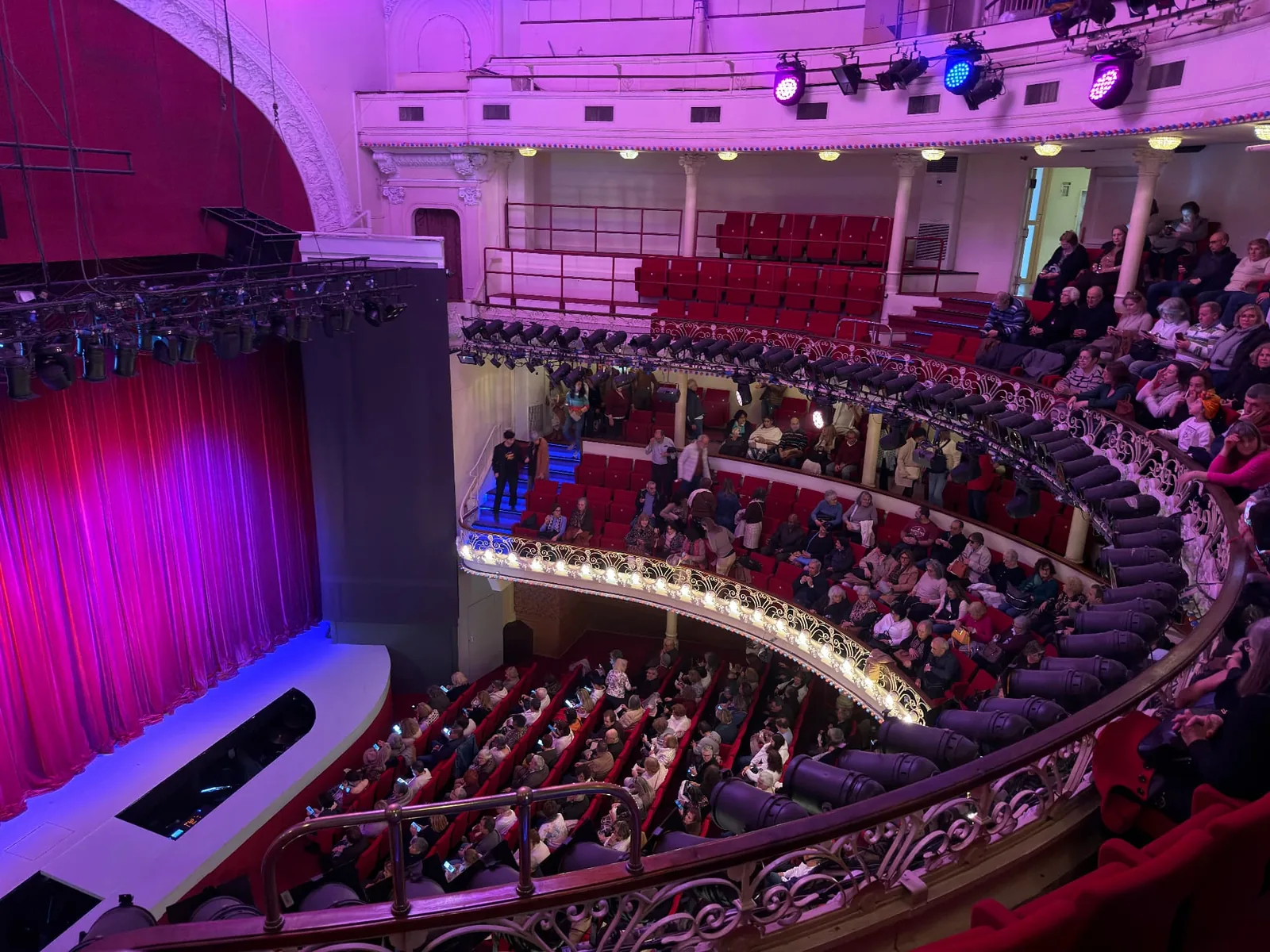
The decision to go to the theatre is not simply a response to a communication stimulus. It means setting aside time, accepting a price, choosing a date, coordinating company, arranging transport, weighing the risk of an experience still unknown and believing that this possibility deserves to prevail over every other way of spending the same evening.
That is why a piece of content can produce attention without producing movement at the box office. The person saw it, recognised it, perhaps even enjoyed it, but has not yet found a reason strong enough, a practical condition favourable enough or a level of trust capable of turning curiosity into commitment.
A cultural campaign therefore needs to understand the distance between what is easily observable and what actually structures a decision. Platforms measure with great precision the willingness to stop, watch or react, but cultural attendance depends on a reorganisation, however small, of the life of the person who chooses to be in the room.
Cultural choice happens within a system
People rarely decide to see a show because of a single point of contact. They may discover it through a video, recognise the title in an interview, come across a review, receive an email, hear a recommendation, walk past the theatre, talk to someone and complete the purchase several days later.
The last touchpoint may be recorded, but the decision was built through accumulation.
There is also a significant part of that influence that never appears in any report: the conversation over dinner, the recommendation from someone trusted, the memory of an earlier experience, a family tradition, a teacher's suggestion, the wish to accompany another person, or the familiarity built by the institution's continued presence in the city.
Social media takes part in this system, but does not contain it. It can begin a journey, reinforce a conviction, recover a postponed intention or introduce urgency, without the final outcome ever being attributable to it alone.
This limitation does not make measurement useless. It makes it more demanding. Rather than looking for a simplified relationship between a post and a sale, we need to watch how different signals evolve together: recognition of the production, searches, website visits, incoming questions, the rhythm of the box office, responses to emails, the distribution of sales across performances and the way audiences talk about the experience.
Marketing begins before communication
Social media is often asked to solve problems that did not originate in communication.
An unclear artistic proposition does not necessarily become more understandable by being published more often. An unsuitable calendar is not corrected by a creative video. A confusing pricing structure does not disappear with greater reach. A difficult purchase process, incomplete information, an inconvenient performance time or an inconsistent service experience introduce frictions that no editorial calendar can remove.
Cultural marketing begins with the decisions that define the possible relationship between the work and its audience. It lies in how the programme is contextualised, in the moment chosen to open sales, in the clarity of prices, in the distribution of performances, in ease of purchase, in accessibility, in the partnerships established and in the way someone is received before, during and after the experience.
This means marketing should not operate merely as the final layer charged with announcing decisions already taken. It needs to be involved early enough to understand how the proposition will be found, interpreted and absorbed into people's lives.
When communication receives the project only at the point of producing materials, it can make visible what already exists, but it has little room left to correct whatever is making the choice harder.
Every channel needs a function
Thinking of marketing as an ecosystem does not mean being present everywhere; it means understanding what each channel does best and how it connects to the others.
Social media can create discovery, closeness and familiarity, allowing a production to reveal its language and its world step by step. Search captures a more advanced intention, when someone is actively looking for the title, the performers, the venue or an experience for a particular occasion. Email allows continuity and depth, speaking to people who have agreed to a more direct relationship. The press offers context, critical mediation and legitimacy. Partnerships bring the proposition closer to communities the institution would struggle to reach alone. Front-of-house and customer service identify doubts and obstacles that reports cannot explain. The box office offers behavioural evidence of the moment attention turns into commitment.
The experience in the room then performs a decisive function of its own, because it confirms or contradicts the promise built by the campaign. An organisation can win a purchase through communication, but only the quality of the experience can turn that purchase into a relationship, a recommendation or a return.
When each element has a clear function, we stop demanding from social media what it cannot give and begin to judge the system by its combined capacity to create understanding, reduce distance and make decisions easier.
Building a relationship that is not borrowed
Platforms give access to extraordinary scale, but the relationship created inside them remains governed by rules the institution does not control. Reach can change, favoured formats can shift, and a community built over years can suddenly become harder or more expensive to reach.
A cultural strategy should therefore not limit itself to accumulating followers. It needs to turn occasional contact into relationships that can continue beyond any single platform.
That can happen through email, repeat purchase, relationship programmes, customer service, memory carried between productions, and an institutional identity clear enough for audiences to seek out directly what the organisation presents. It is not simply a matter of owning a contact database, because a stored address is not, in itself, a relationship. It is about preserving context, offering relevance and letting each previous experience shorten the distance to the next.
An institution that ends each production with more followers, but without understanding who came, why they decided, what made buying difficult and what might bring them back, has accumulated visibility without necessarily accumulating knowledge.
Learning is the real asset
The result of a campaign is not only its final revenue, even though revenue is indispensable to the sustainability of the organisation. A campaign should also leave behind transferable learning: which argument brought less familiar people closer, which doubts recurred, which content helped make the experience more concrete, which audiences responded earlier, which performances required a different framing, which barriers remained and which combination of channels appears to have sustained demand.
That learning does not come from an isolated metric or from a piece of content that seemingly “worked”. It emerges from comparing behaviour, context, communication and outcome across different moments and productions.
When an institution preserves that knowledge, it stops beginning from scratch each time. It becomes progressively better at forming hypotheses, recognising patterns, adapting messages, anticipating friction and building relationships that outlive a single campaign.
The aim is not to abandon social media, to diminish its importance or to return to a pre-digital form of communication. It is to place it where it belongs: neither as an enemy nor as a complete strategy, but as one instrument within a wider architecture.
Cultural marketing becomes genuinely strategic when it stops asking only how to make a production appear on a screen and begins to understand how it might be made intelligible, desirable and possible within people's lives.
Was this note useful?
Get the next notes
I write about culture, audiences and strategy. No fixed schedule, no noise.
Social media is not the audience
One of the most common confusions is treating visible behaviour on platforms as a faithful representation of audience behaviour. Yet the people who comment, share or react are not necessarily the ones who buy, return or develop a lasting relationship with the institution.
Someone may follow a production for weeks, recognise every performer and interact repeatedly without ever choosing a performance. Someone else may buy regularly, recommend shows to friends and never leave a public reaction. There are audiences that are extremely expressive online and rarely present in the room, just as there are culturally engaged theatregoers whose behaviour leaves almost no trace on any platform.
This does not diminish the value of interaction. A comment can reveal language, expectations, doubts, memories or unexpected ways of reading the proposition, offering qualitative material that matters to the campaign. The error appears when we mistake willingness to react for willingness to attend, or when we use the visible community as though it represented everyone who might be interested.
Followers are a potential audience inside a platform. The cultural public is a wider reality, made up of habits, relationships, previous experiences, economic possibilities, family contexts, geographies, expectations and different degrees of closeness to the institution.